How to Silence a Room Without Being Mean About It

We’ve All Been There…. the students will not stop talking.

    Or the silence only lasts as long as you hollering at them.

So you do what your teacher did to you, you raise your voice one last time and say, “Okay, everyone heads down!”

Then you have to police who is actually putting their head down since it’s not comfortable, and you feel bad for the half the class that was actually being pretty good.   You snap, “head down.” to the ones who are being squirmy and you feel uncomfortably close to the kind of teacher you really don’t want to be.

Sometimes I want students to be able to talk, and to be able to ask each other questions (because sometimes you can’t get to them, especially when instructing a small group), and to trust them to be able to actually work and talk a bit.  Sitting all day in a plastic chair can be boring.  When students are happy, they do better work and don’t cause as many discipline problems.  It’s nice when the students get into a ‘flow’ state and don’t want to talk but that’s fairly rare. It’s difficult to consistently provide compelling seat work.

This was a trick I ‘discovered’ last year – I’m not going to claim it’s original or innovative.  It’s just never been suggested to me.  It’s so simple and obvious that I almost feel bad talking about it, because invariably someone is going to arrive here and think, ‘Oh, just that.  I already do that.’  But, nothing is obvious until after you figure it out.  So mention it on the off chance it hasn’t occurred to you, dear reader.  We teachers have too much going on in our minds already!  In fact, it would be fun to make even a partial list of what goes on in our brains during a typical lesson  including which assembly of questionable academic value has been scheduled during direct instruction time.  But,  I digress.   Here’s the system I use.

First warn the students ahead of time that talking in whispers is a privilege and that many teachers do not allow even that to remind them how nice you are. (Since you are!)   “If the teacher can hear it, then that’s too loud,” is the standard.  You can demonstrate how to whisper.  When their talking finally does get out of hand, when they are practically shouting over one another, use your best Love & Logic ® empathy, and tell them that, ‘Sorry, but they need to be reminded of what silence sounds like.’  Also that you need to prove to them that they can be silent.  It won’t kill them.

  Have them sit up straight and fold their hands on their desks.   Tell them they can’t work, can’t read, and that the timer will be reset if anyone talks, works, or reads, even a little.  Set a timer for two minutes, preferably one that the entire class can see so that the seconds will drag by excruciatingly slowly.  Then just be sure they sit there without working.  Occasionally you will have to reset the clock and drag it out to four minutes, when some child talks with just a few seconds left.

I do tell them, ‘This is supposed to be boring, to remind you that working quietly is not such a bad option.’  But don’t lecture them for a few reasons:   One, it’s entertaining to them and makes the time go too quickly.  Second, when you lecture  then it feels more like you’re just punishing, instead of practicing quiet. It’s a dead give away that you’re totally pissed off.  Even though part of it is a punishment, no question, it seems less so if you’re just silent.  It also makes you seem more strict in a good way.  Besides, they tune out nagging after two sentences.  Yada..yada…yada…they’ve heard it all before. It hurts your credibility.   Also, the students hear the beauty of the silence, the peace on their ears.  This is one reason it’s so effective, most can feel the peacefulness and they like it!  It gives them an internal reason to be quieter other than purely out of fear.

This is an consequence to threaten and use after they’ve wasted excessive time lining up.  Just start looking at your watch and calling out  (since most 2n graders don’t pay rapt attention) the amount of time they will now be ‘paying back.’  “You waste my time, and it’s only fair that I waste yours.”  is what I tend to say.  Second graders love the idea of fairness.

This works for several reasons.  One, children who are naturally used to being quiet, don’t find it so hard, they almost like it.  It’s only hard on the ones that need the self discipline.  They are learning a valuable lesson in self control.  So this time is not wasted.  It’s easier to see who is complying and who is not because sitting up is more natural a position than putting a head down on the desk.  It doesn’t feel quite so punitive.  Third, when you do finally let them work they can move seamlessly
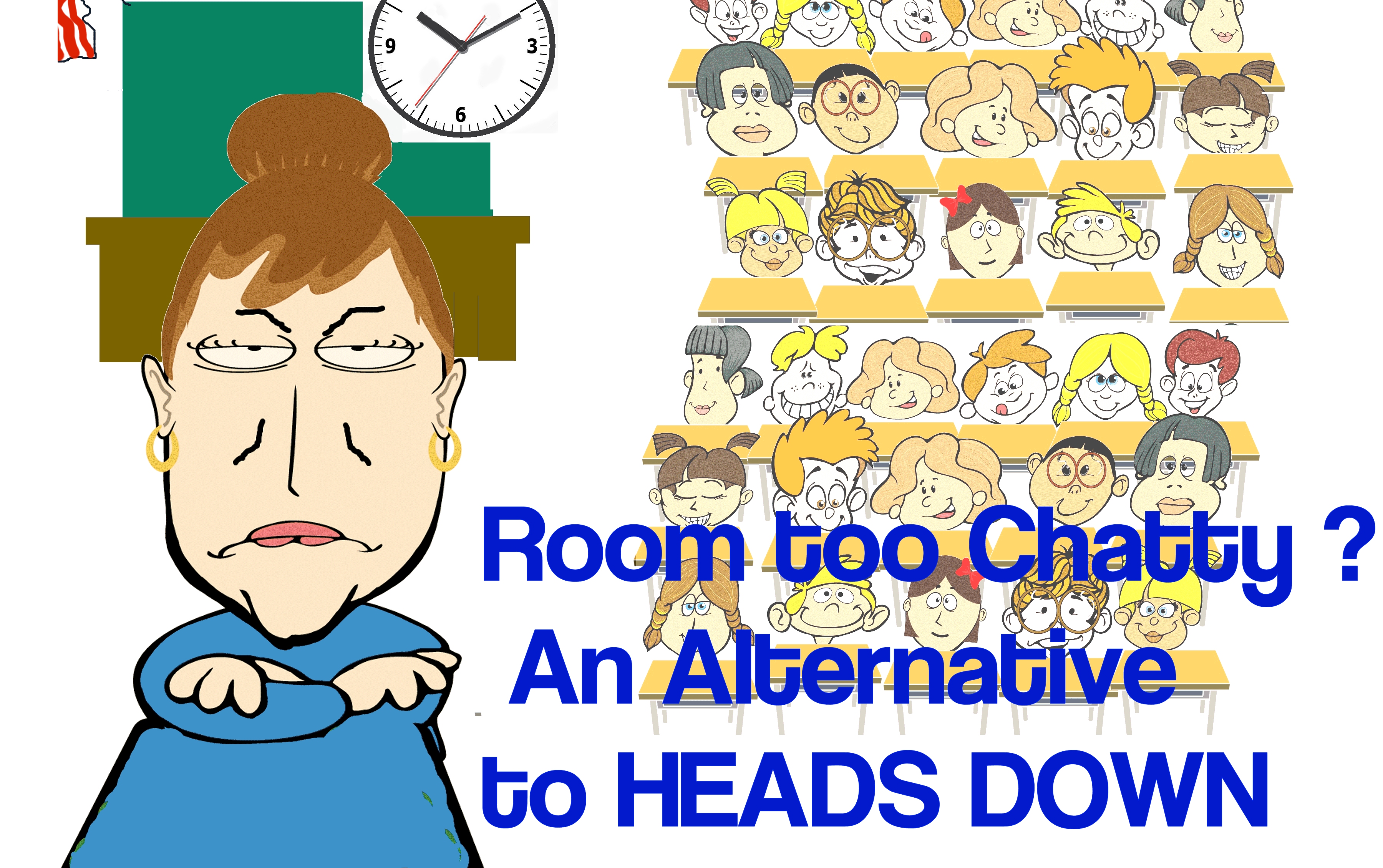
classroom with mad teacher final

into that state. Sometimes if it’s necessary during to do this during silent reading you can ignore those actually reading and then the entire class slips back into the behavior that you wanted all along without such an abrupt end.

You will probably need to reset the clock back to two minutes once or twice if you have an impulsive kid or two. (If that child hasn’t learned after a second time, just separate them, don’t punish the entire class. Again, some are just too young to feel peer pressure especially the boys.)  You may have noticed that the sting of peer pressure doesn’t work perfectly well in 2nd grade because many of them are still rather immature and focused on themselves and just don’t care what others think. (When it suits them.)  But it’s a start, they do need to become aware of it, since socialization is half of what school is all about.

The best part, you get the peace and quiet which sometimes you really just need.  You know,  those times when you can practically feel the cortisol pumping into your blood stream and your nerves feel like bare wires without a shred of insulation left.  But you don’t have to be the slightest bit mean or angry about it.

You will have to watch them for it to be effective.   After you follow through on this a few times the

threat of this punishment will start to work.  If your class is filled with super energetic kids as mine was just recently you’ll need to do this once or twice each hour.  If nothing you will enjoy the peace & quiet and revel a bit of fair play because those stu

dents who so blatantly ignored you deserve a consequence.  It sure beats yelling.

It’s easy to forget that the students, even the chatty ones, want a quiet room as much as you do.  Also, students love those teachers who can control them and be strict but without getting all angry and huffy about it.

The forced silence really does drive home the message. The students soon recognize they want that peace and quiet just as desperately as you do, even if they have trouble staying that way.

  • Scott

Dealing with Name Calling

He Called Me a Name !

We hear it every single day, usually multiple times.  Right?

Half the time it’s just children doing what they always do when it comes to conflict, get an adult involved.  Why?  Because that’s part of the game!   It’s half the fun!   ( That kids automatically involve adults is a topic for an entirely separate blog post.)

So, what do you do?  You know the drill.
You go over and say, “She says you called her a name.”
And how many times has this happened to you?
Yes, right after she stepped on my foot!”  (Twice I’ve heard that in 15 years, at least! Now who is the bully?   In fact, my very definition of ‘bully’ starts, not with mean behavior but with those who hide behind rules while flagrantly breaking them by themselves – kids and adults.)
YOU:        “Okay, what should you say?”
NAME CALLER:  “Sorry.”  (with varying degrees of sincerity)
“NAME CALLEE:”  “That’s okay.”
and everyone is fine.

I’m often amazed at how quickly a child is willing to let go of seemingly grievous emotional injury which proves that kids are expert adult manipulators.

Then all is fine.

….  for the next two minutes.
Until the cycle starts all over with another child.

Sometimes, before I go over and intervene I ask, “What would you do if I wasn’t here?”  Which truly concerns me because our job can’t just be protecting, it must be teaching the skills to cope or we leave them with nothing.

While it’d be great to teach conflict resolution, which is hard and complex, we need a way to teach children, they don’t have to be hurt.  They don’t have to be the victim.   We need to show them there is more than one option than choosing to let it bother you.

This is a fun way to teach a child to turn the tables, to not just ignore, but to adopt a superior attitude.

You could do the usual lecture.  Which you know isn’t going to prevent a damn thing.  Because one can’t ignore without the tools the ignore.  If the name caller gets the last word, they have won.

Show, teach, model, how to switch the attitude around. I make sure I draw a lot of attention.  This is easiest place for these lessons when the name calling happens when lining up, which it frequently does, carry over from problems at recess.

CHILD to you:  ”  ____ called me a name!”
YOU:  “Well, you know what you have to do….”
Then I take their arm gently and extend it while saying something like, “But who cares what they think?  Are they better than you?”  To which they will never say yes, of course that person isn’t better.

Then do a full body model of the “What… ever.. talk the hand” stance.  Make it fun, the opposite of serious.
YOU: “You have to roll your head, roll your eyes hard, and make that disgusted sound, “ugh!”  You know…  like you have something stuck in your throat.  Then, with as much attitude as you can muster just say, ‘What……. (the pause is essential)  ever!  (The grating tone is also essential.)    Talk to the hand  ‘cuz the ears don’t care. ‘ (or ‘..the face isn’t listeningTalk to hand FINAL with text.’  or ‘…the ears at recess.’) ”

Children invariably smile when they see the utility of this attitude.  They sense the power of it.  They get it, even if they still won’t always do it. They will start to try or start to think about trying.   Keep it up every time a child comes to you.  Soon students will even brag to you that they did it, They even show off how they did it which is every bit as gratifying as teaching regrouping.

Does any of this mean you won’t condemn name callers?  Of course not, especially when a child laughs at another or says something rude during class.  Teaching niceness and socializing children is half of the job of teacher.  Teaching that rudeness deserves scorn and a bit of condescension can’t be bad.

Someone could argue for a more loving approach such as, “I’m so sorry you have to insult me to feel better about yourself.”  But, that’s pretty advanced.  This is a good starting place for 2nd graders because it’s fun and not returning the name calling with more of the same.

It’s hard to break their bad habit of manipulating an adult to do their thinking. Having an adult step in must give a great sense of power which explains why they do it so often.  Somewhere, at the bottom of the list of motivations for involving and adult is actually hurt feelings.  With this you attitude we teach children to get self esteem and power from within.  That’s a lesson they can use their entire lives.  Finding power and strength from within is just as important a thing to teach as math or language.  It’s one more reason to enjoy the difference we can have on a child’s attitude forever as a teacher.

Three Easy Super Fun Class Games

(Beats the heck out of Heads Up 7-Up )

Which I call “Heads Up – Let’s Peek & Cheat” (which, face it, is the only way to have any idea!  It’s a ridiculous game.)

The Chair Game – The Map Game & The Coin(s) Game

Every once in a while kids just need to move.   If you haven’t heard of Go Noodle (It’s a website designed to help kids get indoor exercise at school)  or have but don’t want that much noise this is a game I invented that students love.

The Chair GameThe chair game - two boys final

This game couldn’t be more simple.   Pick two students two at a time (I chose using Popsicle sticks.) and have them race to be first to sit in each others’ chairs.  The first to sit down wins.   Sometimes the seats are across the room, sometimes it’s two students sitting next to each other.   All you have to do is push the chairs back to create running lanes.   You can go through an entire classroom of about 30 kids in less than five minutes.  It never gets boring for the students. When there is an odd number of students the teacher gets to play too.  Then you can clown around, pretend to ”cheat by picking up your chair so the other student can’t sit on it, or just holding it up..  (Since the game is over you can get away with this silliness without inciting more rowdy behavior- always a danger when kidding around with students.)   Students are too involved in the game to mess in each others’ desks.

If there is extra time I really need to kill I do a second round which I call “The Lightning Round” just because it sounds so cool.  Actually it’s ironically slower because the students now don’t have memorized where most everyone is sitting.

Since it’s only two kids at a time there is never chaos.   Rarely they will bump but never hard.   In the many many years I’ve been playing this game no one has been injured.  In the primary grades students are happy when I call a tie.

You can have a lot of fun with the names of the current pair of players too.   “It’s the battle of the girls with names that start with S.” or “It’s the battle of the _____ (group name)  versus the ______ (group name).”   And comments like “And  _____ wins by a cheek!”

At the start of the year it’s a good way to get students to know each others’ names.  I let them both stand first so that the first name called doesn’t get a head start.

If the direct instruction is going long you can bribe students through it by promising this game.  It has just enough action to be fun but not dangerous, and since it’s only two kids it doesn’t get very noisy because the seats are switched so fast the rooting is over before it starts.

Try it out!


Two More Actually Educational Games  – The Map Game  or The Coin Game

Needed: One large map – traditional pull down style preferred.  Or a card with coins or groups of coins big enough to see from back of room.  (I project a coin bingo type card.)

The map game works better if students have been taught some geography.   This game is equally simple, pick two students as contestants.   Have them stand in front of the pulled down map facing the class. Then call out the name of a major location, feature, continent, ocean, state, city, etc.   The first student to put his finger on the feature wins.   This is powerful because the rest of the class is looking and pointing and shouting advice.  “It’s right there!”  (You can get a smile out of the person who was last by saying they are ‘second place!)

The coin game is a variation where you project or put up a bunch of coins in groups, I put up a coins bingo card and then call out the amount to find.   Then give hints if it’s hard.
For example:

“50 cents!”  It could be two… what coins everybody?”   (Two quarters!)

“Or it could be one quarter and two whats and a what?”

You can pick harder or easier values to be sure they match the abilities of students who are faster or slower learners.  I also make sure I don’t pit the fastest kid against the slowest because it’s too hard on that one kid’s ego.

These two games are fun, powerful and beat the hell out of direct instruction.   It’s also good review just prior to a test.

Happy teaching!

  • Scott

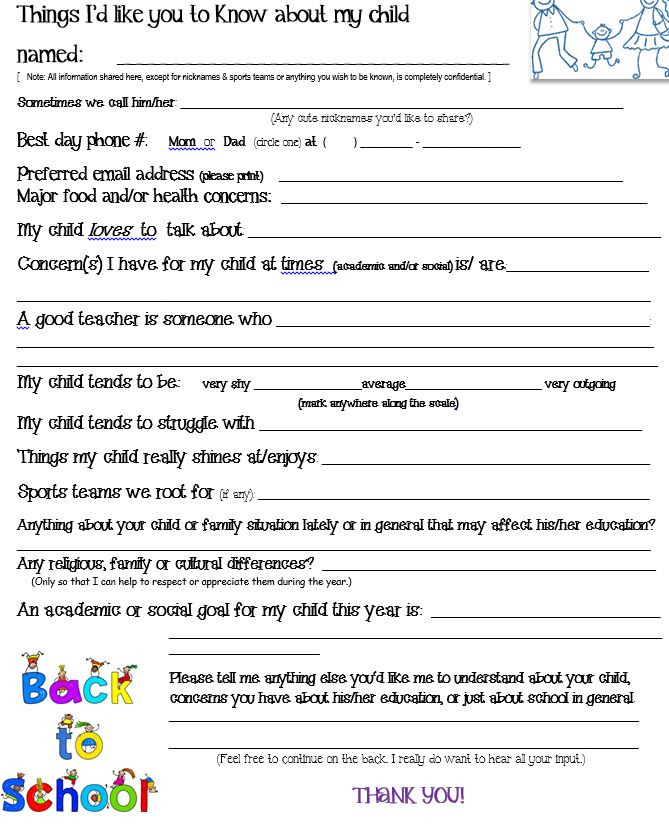
Parent Input Form

Free Parent Input Form  Capture

Just click below:

Parent Input Form Primary

I’ve been teaching a long time and  I’ve seen all sorts of great ideas – teachers running things for Back-to-School Night:
lists of standards,
Notes on ow to help your child with _______
Classroom rules & introductions.

I even have a copy of a parent input form but so why hasn’t it occurred to me how excellent it would be to use a parent input form?  (Smack!)  That’s the sound of a heartily self-applied ‘dope slap.’  This just all proves that nothing is obvious until it occurs to you.  I guess I was too busy thinking, ‘Back-to-School night is all me telling’ parents about school.  It’s such an easy mistake to make as a teacher that more talking = more education.  After all, we’re teachers.  We are in the information giving business.  It’s so easy to think that we have the magic words all the time.

It’s such a simple and powerful idea!   So I looked around.  Of course I can almost never just take what I find on the Internet. I have to make my own.  So here it is if you like it – FREE!    You can click on the link so you don’t have to try to copy the low res images here.

The best thing about this is that you can essentially prove to parents that you care about the child just by asking.  Otherwise they just hear you saying you care.    The huge benefit is that you learn exactly what quirks the parents have about their child, what they are concerned about in their child and, even more, what they are concerned about in you.  This way you can be sure to address all those things

Here is the form I put together.  I just used it for the first time.  It has a good mix of questions probing for concerns while allowing children to boast and be rightfully proud of their child.  My favorite question turned out to be:

A good teacher is someone who: 

Because you can read the parent’s priorities.  Most just want ‘kind and encouraging’, but a few listed ‘organized’ and one stated bluntly, “One that leaves the parenting to me.”  Sigh.  I hate it when parents get grumpy and defensive and treat us like the enemy when all we want is the best for their child.  (You can bet that kid doesn’t get enough parenting.)

It is absolutely free.  I have it in several formats, the RTF (Rich Text Format) which can be opened in any word processor, and also old Word format, and newer Word format, and PDF.   You need it in editable format in case you have specific questions you’d like to swap for mine.  It also comes packed with the font to make it look cute.

Happy Teaching!

  • Scott

How to deal with: 1. Students Who Lie & Deny 2. Sending Home, The solution to the in-your- face Defiant Kid

There are TWO different ideas handled in this post:

Point 1:  Students who Lie & Deny  Click on the link below or image at right.

Even if you know how to deal with students who lie & deny (1st… don’t argue, right?)  you may wanlie11t to save this site for solutions or tips on dealing with rarer and more tricky management situations during your day. 

Classroom Management Tips
(How to Handle Students who Lie)


(I couldn’t just post a blog I had to add my own advice below which I’ve followed many times in my career.  In a staff meeting many teachers made it clear they never considered they had this option.)

Point 2:   ‘Sending Home’ as a Solution for
the In-Your-Face Defiant Kid

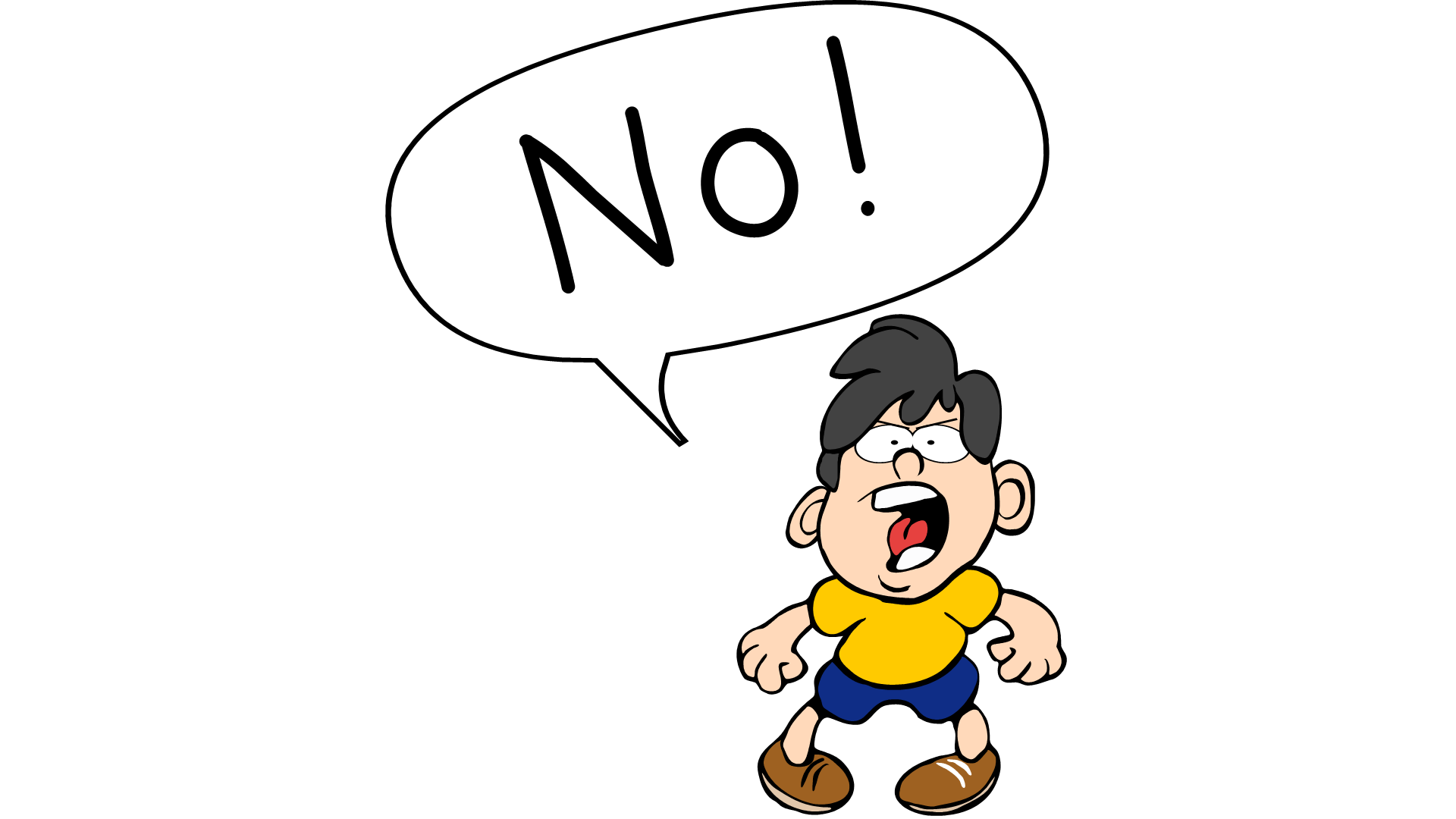
One highly under utilized strategy (it depends on your state education code)  for that rare, super problematic kid if he doesn’t have an IEP or behavior plan, is to just send them home.  Most state laws grant you that right.  You don’t have to do an official suspension.  Kids go home sick all the time, no one raises an eyebrow right?  This is no different.  In California and many others teachers have the right to suspend if a child is disruptive.  It’s not as big a deal as everyone thinks.  Remember, it’s your classroom.     angry boy

This is only for the “no I won’t”  silently or aloud kid who won’t go to the office or follow the class someplace.  I don’t do it for ‘meltdowns’ inside class or even refusal to work.  Sometimes, I will do it even if the principal is there but if he is it’s wisest to call him first. If he is too busy… call the parent, especially if education has come to a complete halt.   I explain to the child, “You can only stay at school if you do what the teacher says.”   Because it’s true.  We can’t make children sit in their seats. We don’t make them do their work or consequence.

You call the parent and say they have a choice, they can come and get the child now, no fuss, no ‘official’ suspension or you can do it officially with paperwork. The child can try again tomorrow, they will be welcomed back.  No parent should want an official expulsion because a child only gets so many of those before action must be taken.  This is just a wake up call for the parents.

Note:  Be sure you are on solid ground with your administrator and state.  I’ve done this a half dozen times over the past 15 years, mostly in fifth grade.  I’ve never been reprimanded for doing it.  Because you do have the right to teach, children do have the right to an education.  You and your class don’t have to tolerate a child who is making life miserable on purpose (with the usual exceptions – no classroom aid to take him/her out  of the room and no Special Education Plan.)  But it’s seldom those kids.  It’s the one child whose parents claim is absolutely normal but who clearly has oppositional defiance behavior.  Some teachers think they and all the other children must tolerate every single disruptive behavior because a child has a label.  Or they see the inability to make every last child act perfectly a failure on their part.

This action puts pressure on parents to discipline harder or more consistently which they usually aren’t and are just hoping you’ll house their child for the day. If you have a child like this, you can bet very early in the year, like during the first week, your limit will be tested on what you will allow.  We don’t have to put up with it because it is not just that disruptive child who has a right to an education, you have the righteous power of more than twenty other families whose children also have a right to an education!  If the parents ask, “is this a formal suspension?” – I say no (no administrator has ever questioned me on this).. and the parents shouldn’t want it to be either.  This is fast and low key, no muss, no fuss.  The child is gone, you’ve made your point in a huge way and you can get on with your day.

A few years ago I had one of the most difficult children in school, a truly defiant willful child with next to no respect for authority.  I sent him home three or four times that year.  The parents didn’t like it but what could they say when I explain, as sweetly as possible, a single child cannot be allowed to set the agenda for twenty plus students and one teacher.  There is no arguing with that position. And, it’s not about what’s good for you as a teacher, it’s about what is good for the other students.   Kill them with kindness  but don’t bother trying to make them like you. If those parents can’t already see that you truly care for their child (which is one reason you aren’t tolerating that child’s behavior!) it’s because such parents will always project upon you all their frustration with a school system that forces them to recognize their child’s or their own issues.

Off record suspension forces parents to heighten their consequences and discipline because, if nothing, they want their peace at home during school hours.  It’s even more intense if a parent has to leave work to get their child.  After that first and sometimes second time, that child will finally fear you contacting their parent(s).

Parent may claim, “But he/she is never that way at home.” don’t bother arguing, just know that it’s probably because the child gets its way all the time.  Just let them know that you’re happy to see their child back the next day when they’re clear they must do what the teacher asks.

Remember, it’s not just that disruptive child who has a right to an education, you have the righteous power of more than twenty other children also have a right to an education!   A child can’t act defiantly at school, it simply can’t be tolerated as it isn’t in the adult world.  When adults refuse to follow the rules, the police are called.

For people who argue, “What kind of punishment is being suspended?  The child gets the day off!”  It’s not punishment for the child, it’s punishment for the parents.  And, it’s a break for you and your class who have the right to learn in peace.  Besides, there is something inherently shameful about being sent home from school.  While many children love to hate school, deep down they know they need it. Also, there’s powerful reverse psychology there, they aren’t allowed to be at school, so suddenly they want to be!   Here’s the real kicker, that kid also wants to come back because, for at least seven months, they want you as an adult in their lives who will, for a change, discipline them firmly, kindly, and consistently.  I often think this is why problematic kids act out more at school.  They want the limits, delivered kindly, that they don’t get at home.

Eventually the parents after the 2nd or 3rd call and threat of first real suspension will finally begin to find a way to get through to their child. That is the true power of unofficial expulsion.

Recently, because some teachers were sending home more children of color for offenses that lighter skinned children in whom they were tolerating similar behavior.  But, since I’m sure you are sensible good-hearted teachers as readers – I don’t even need to give a warning to be fair.  In some states, (this just changed in California) can sometimes only send to the office for disruption.  But the whole idea is that it’s not official.  I don’t overuse it.  I’ve gone six or seven years without needing to, but for that really awful kid needs to learn, schools are only for those who do what the teacher says.  Always though, within limits, if they really don’t want to work but don’t bother anyone else, tell the parent, but only send home for truly disruptive outright in-your-face defiance.

Remember it all comes down to relationships, if you are kind and fair and truly like your kids, they will do what you ask, poorly perhaps but they’ll do it.  Students write sentences for me all the time for misbehavior.  They could throw a fit but they don’t, they just take their punishment quietly and get it over quickly so they can breaking another rule soon!

Books Worth Reading for Teachers

These are all RESEARCH BASED books.  This is not pop psychology.  

Emotional Intelligence  – Daniel Goleman      emotinal intelligence images

Despite having been written 20 years ago, the world is still slave to the idea the I.Q. only determines intelligence.  It’s obvious that we don’t just think or reason with our cortex, the I.Q. part of our brain.  We do some of our most crucial thinking in our ‘hearts’ – the mammalian layer of the brain, below the cortex.   Some people who have great IQs, sometimes have limits in hearts  (the doctor smart enough to know all the cures but not wise enough to realize that his compassion is as necessary to his care as his prescription).

This book will help you understand how brains develop.  Then you can develop your own methods and priorities instead of reading advice on how to teach or parent.   Huge message:  Our job with children is NOT just to protect and shield them from negative experiences.   When we do that we rob our children of the opportunity to learn to cope with those experiences.  We send them into the world unprepared.   Extreme example:  One family didn’t allow their daughter to have friends over, ever.  The parent’s reasoning, “Friends can be demanding and pushy and might make my child unhappy.”   Having a childhood free of strife does not guarantee a happy adult.  It does guarantee an adult with absolutely no coping skills.

Brain Rules  – John Medina        brain rules images

The very latest in brain research.   For example, exercise increases intelligence, it is documented.

You Just Don’t Understand – Deborah Tannen

Men & Women, thus boys and girls have completely different social priorities and styles of communication.  The earlier we understand this the better we can talk to them.   Men compete, women share information.   Women need to make eye contact, men could care less.  Again, this is all researched based.

You just don't understand

A list of gripes to come. (while avoiding excess negativity)

We teachers…. we are a rugged group.  We work all day in near isolation with a roomful of children who, only by the grace of their own decency choose to stay in their seats.  At primary they are very sweet and very needy.  Filling that need with our attention is one of the best parts.

No one knows what we do, except other teachers. Yet we hardly get a chance to talk to each other.  When we do, we have so much to bi….. complain…. about… that we hardly know where to start.  It’s easy to feel frustrated and overwhelmed.  So there’s not one to talk to, and then, the hardest part, projecting the image that… life is wonderful!  I love having hours of papers to grade after the bell rings or parent who remains defensive and angry over the tiniest comment even when I so obviously (because I tell them) like their child.  Besides when we do get the chance to talk together either:  1) It degenerates into negativity.  2)  There is usually a task which needs attention like a field trip.  Often both!   Your team members, they’re your buddies but the demands of teaching and the need to appear in control and perfect at all times and tinge those relationships too.

So I’m writing this.  Just to get my concerns in the open. (anonymously)  So perhaps, you won’t feel you are the only teacher in the world that ever struggled with things.  Everyone else is just… lying.  Not overtly, just through omission. Between classes we admit to each other, “Wow, today is hard.” or “My class is awful today.”  (just before a major holiday).  But we seldom talk specifics.   That’s with some reason which is explained below.

So you don’t get the idea that I’m a terribly negative dark person I want to go on record as very impressed with the colorful blogs of teachers who have such great ideas and make it seem like teaching is fun and easy all the time.  I am just like that 90% of the time, upbeat, smiling and annoyingly cheerful.  I admire those bloggers and I wish I could be like them.  Still, I figure that space is pretty much filled.  Someone needs to talk about the harder side of teaching, if nothing, so you just don’t feel it’s just you because as classroom teachers, we are not allowed to have long faces, ever. 😉

Teaching is often fun and sometimes easy, but all the time?  No, that’s just what we want parents to think.  We know that we are expected to be poised, in control, happy and to able to make even the most dull tedious subject enthralling.

But teaching book knowledge, that’s just the beginning of our jobs.  We are the number one profession talking with children. So any time society has a problem some bright person in a think tank says, “Hey, hand that problem to the teachers!   They’ll fix it!  They’re amazing.  So we also are expected to heal all these major societal problems:

  1. Cultural awareness and tolerance (why not love?) of other ethnicities.
    2. Bullying & meanness in general.
    3. Lack of exercise.
    4. Personal hygiene. 

And that is just the short list!   You, dear reader, can probably offer a dozen more things to this list such as appreciation of art,  music, science, character education, love of reading, writing, knowledge, to name but a few more.

oh… and after that…

  1. Educate each child to the highest international standards despite social conditions at home that are beyond our control so well they can pass tests designed to trick them.  All that despite living in a get rich quick culture that pays only lip service to the value of education (only recently required since the death of the industrial sector and blue collar labor as a certain career path) and where teachers are minimally respected compared to other cultures.  Here, children are almost expected to act out.  Defying authority is a part of our national heritage.

And what do we do?  We sigh and say… “SURE!!!  Bring them on!”  We’re teachers!!!  We love it!  We are filled with life and love and great ideas.    We are culturally aware healthy people who make great role models.  No problem!   And we’ll teach all of that with just a marker and a whiteboard.

Below is a list of the chief things I’d like to ‘discuss’ (okay, gripe about) because, again, there is so much hesitation for we teachers to even admit that our jobs are hard.

Why?

Because we are constantly judged by by parents and even colleagues!  We have the most public jobs there are outside of actual celebrities.  So we pretend that we never raise our voices in the shared fiction that children are always perfectly compliant and we are perfectly in control of their behavior.  (For the most part, we really don’t shout.)  There’s enormous pressure to appear sweet and unruffled at all times.  It’s just part of the job. It’s show biz!  If we don’t we are judged, even by colleagues who know the truth.

True story:  There was one teacher, years ago, widely regarded as a ‘mean teacher’ by the children who once chided me for letting a bit of frustration with my class show outside my door in my tone of voice.  I couldn’t believe the hypocrisy!  The message I took, “Be as mean as you want just don’t let anyone know.”   Sigh….

But with live in a world that’s always filled with judgement despite that little ‘judge not” admonition in the Bible. People love judging for that quick easy rush of superiority they get to feel.   Parents, get sick of being judged too.  The less kind ones are happy to have someone else to criticize as they have been by other parents, acquaintances, and sometimes total strangers on how they should be doing their job.  Ira Glass (of This American Life) said it best, “Criticizing parenting is an American pastime.”   Everyone knows, even those without children, the ‘proper’ way to raise and educate a child.

I’m not condemning parents.  They have the hardest job in the world that makes our jobs possible.  They need as much understanding as we do and I love to offer it.  But even when I assure them they are doing fine and their child is wonderful, they can still act defensive.  They are under tremendous pressure, mostly from themselves to produce a ‘perfect’ child.  (How is that possible when the very definition of human means includes being imperfect?)  So they often pass that along that pressure to us.

Life would be much easier if people admitted they were humans and not gods.  That’s another reason for this blog.

We pretend too that it is always easy – we have to.  It’s expected.  We’re all about rainbows, sunshine, friendship, bright colors and we end all our sentences with exclamation points!  It’s not a bad thing, it’s who we are!   Sometimes, for me at least… it’s too much.  (Me who repainted his window welcome sign in Tempera rainbow colors.) When you walk into a primary teaching store don’t you get sick of seeing everything in bright primary colors?  Can’t we at least get some other secondary colors?  Some orange or some purple?   It can be downright nauseating at times.  There must be even kids in the world thinking, “Does every thing HAVE to be bright red, green, blue, or yellow?  Can’t we have… pastels?????”  That’s primary world where we live. (No, those are for babies.) I’m not at war with it.  I just want to talk about it.

So that ‘always easy’ attitude and the decoration schemes spill over onto blogs.   If you’ve looked you’ve seen them:

Happiness and Butterflies and Flowers and Sweetness and Light in ___ grade

And it’s always an alliterative title.   I’d say more but I really don’t want to hurt anyone’s feelings. They have helped a lot of teachers and they produce great curriculum!

I just can’t do it myself.  I have to be more real.  It’s just my style.  Even though at first I tried to find a blog design that had those elements (Rainbows and butterflies etc.).   Maybe I’m just jealous because I can’t manage that level of enthusiasm in my blog.  I aim to be a bit different., honest but not cynical.  I save cynicism for humor when there is nothing left to do but laugh.  It’s not a message as much as a coping mechanism.

So, this blog is about let my hair down and telling it like it is without getting caught up in negativity.   Sure teaching is challenging.  But the thing that makes it hardest is pretending it’s all a walk in the park. I get that parents need that.  They want to believe in us.  So it’s a facade.  We are one of the few professions remaining in which titles are still used and expected – even if it’s just Mrs. Ms. or Mr.  Everyone else goes by first names now, even lawyers.   Parents want to put us on a pedestal.  They are hesitant to call me by my first name – they want me to be so important and above them that I don’t use my first name.  (A thing I hate because it stops them from seeing me as just another concerned human being.)

We are expected to be ‘perfect beings’  (like the teacher in the final episode of Parks & Rec). So that’s the environment:  Perfect children raised by perfect parent and taught by a perfect teacher.  Arrrgh!   To the extent we try to live up to that unrealistic view we destroy honest communication and set ourselves up for disappointment. How are we going to help each other if we are not allowed to admit that the job can be difficult and that children can be nearly impossible at times?

But, it’s never spoken of so we can’t even criticize those assumptions.  I do, at Back-to-School night admit that I am just human.   Parents, do not want to hear that.  It’s probably not politic.   But there are pitfalls in overselling ourselves.

When I do talk with my team I like to be honest with them when, usually just when speaking one to one.  Even in a group of four there is pressure to pretend.  I admit that I forget names of parents in the two years between having them and their 2nd or 3rd child.  Or that collecting everyone’s papers and holding students accountable for their work is easily the hardest part of the job.   One thing I’ve realized if I am finding a particular part of teaching difficult… it’s almost for certain that my colleagues have the exact same problems.  They think it’s only them.

We teachers acquire this reputation as superhumans with an innate ability to control children because we seem to bend them to our will so easily.  When we can get children to work (or pretend to work) for up to six hours while their parents struggle to get them to just complete a bit of homework or a simple chore.  We have impressive hard-learned management skills.    But we know the truth.  One reason children do the work because they are at school and that’s the expectation.  Also our class invariably has some superfocused kids who wouldn’t dream of not doing what they were told.  Unlike those on the other side of the behavior range.  Public authority is new and scary, and defying it seems a bad idea.  They are used to upset parents, but upset teachers or principals, that’s scary.  Most children, but by no means all,  save testing of limits for home where it is safe.   But really, students are not that much better for us.  They’re as defiant, just not openly.  On Monday morning, kids don’t want to work any more than adults do.  They’re human!   Still it’s nearly impossible to not buy into the image of “Teacher as Superhero”.  (Hey, there’s my name for a blog if this doesn’t work out!  2nd grade Superheros!  It’s alliterative. It’s positive.  It’s probably taken by someone.)

I just didn’t want to write yet another blog that perpetuates the above notion.   Most blogs it seems are written with the aim of celebrity and marketing education products.  (full disclosure: I do sell curriculum on TpT but it’s going to be rarely mentioned because my style as a teacher, intensive & rigorous with sufficient but minimal cuteness, is not so common.)  This blog exists because because I agree with the Amy character Amy in Pitch Perfect – “I feel that if you’re not really living if you’re not being entirely honest.”  (or words to that effect)    Our inherent inherent dignity as caring people should be sufficient.  There is nothing gained by never admitting weakness or that, “Sometimes this job is hard as hell.”  That we get though the days smiling, just that itself some days is heroic.

Still, it’s amazing how screwed up people’s thinking gets in this world. Everyone gets caught up with assumptions similar to these in other areas. A quote I loved once on Tumblr:   “What screws us up the most is the picture in our heads of how it is supposed to be.”  It’s true, it really gets in the way of coming to terms with what is so, because that is the path to enlightenment.  I think it’s why so many teachers burn out. (and why we all need summer to recharge)

It we can cut through all the B.S. everything is a lot more simple and easy to manage.
So here is the list I’ve been promising

Things that REALLY need ‘discussion’ (griping).

  1. FADS in education.   (no profession, no human undertaking is more fraught with fashionable ideas that are seldom put into perspective than education.  Consider:  ‘whole language’, manipulatives, standards, standardized testing, No Child Left Behind, PLCs, & Common Core, online databases.)  It seems there is a new one every two years or so.  Each has a good premise which is then blown way out of proportion by educators seeking “the answer” to ‘fixing’ our schools. Invariably the fad is focused on to the exclusion of all other good educational practices.
  2. PLCs.  Professional Learning Communities.  (one of those fads)  A great idea with many flaws and poorly executed by teachers and districts.   Way too much focus on data, as if children were little packets of information and test scores
    a precise and exacting measure of what they have learned when it’s simply a poorly written question.  How many times did you know an answer to a test in school but missed the question?  Few test makers even allow for the fact that children can only store four things in short term memory so they simply get confused.
  3. Technology  (Why can’t they just call them computers, or at least  ‘information technology’? ) – I mean a pencil is technology.  A VCR is technology.  There will be computers in desks or at least one per desk before I retire, I’m almost certain.
  4. Parents.  Who doesn’t have a story about a crazy parent?  They mean well, but raising children drives you mad. Their child is only all its parents hopes & dreams, a direct reflection themselves and their most precious thing.  The emotional stakes couldn’t possibly be higher!  So, no problem.   Being objective is a piece of cake for them, right?  (If this blog had emojis this sentence would be followed by a dozen ‘laughing so hard it draws tears’ icons)
  5. Administrators.  No.. excuse me.. “Educators.”   (Alas, the further you get away from the classroom the less realistic the expectations and the more political the job.)  Still, as much as principals can make our lives hell, who in their right minds would take that job?  Crazy parents, crazy teachers and crazy kids.   Just because I get their job is hard, doesn’t mean I can’t complain.
  6. Students and where they are on the “FOCUSED………………………….. NONFOCUSED” range of behavior.   Some kids naturally behave and some kids just don’t.   That difference is there in all of us, as children, as adults.  It has to do with authority and one’s comfort level living inside or out of the rules of authority we create for one another.
  7. Curriculum companies …and the education market.  There’s billions at stake and curriculum is a ‘racket’    This has been obvious since my very first year.
  8. Standardized testing & common core.  This really belongs with the topic above, but I’d like a nice list of 10 topics for starters.
  9. Colleagues – Can’t we just all get along?
  10. Actual GOOD ideas for teaching  I have tons of good ideas.  We all do!  This is what PLCs should be about, but aren’t most of the time.  For example, a great mnemonics is priceless thing. They work!   My biggest struggle in the past few years has been getting teachers to share what works for them.  Some out of false modesty and others, flat out, don’t wish to help others to make themselves look better.

Still, no one needs a blog that is all negative.  That is not my intention.  There are many good things to share too:

The best parts of teaching.
Read aloud (one of my favorite things to do as a teacher)
Math,   Writing  English    PE    Art.

I will never understand teachers who don’t want to share what works for them.  (which is what PLCs are supposed to be about) I mean… we are teachers right?

I define a teacher as someone with a burning desire to share what is right and true.  Nothing is greater than the feeling of understanding.  There is power and enlightenment in knowing the truth.  By truth I mean,  what we can agree upon as the state of reality.  (Wow, that sounded quite philosophical.)  However, we can only do that by being honest with each other.   

Cheerfully yours,
Mr. Scott
p.s. Oh,  and if you do need some curriculum, well, stick around.  I’m sure I will get around to mentioning that too.

Why do they just stare?

You’ve got to love Back-to-School night.  Who doesn’t want to stand in front of a room full of grumpy adults skeptical about trusting their precious child to you?  Especially when you know a few of them are just certain you’re not the one ‘good’ teacher at the grade level.  (There can only be one, of course.)   back-to-school-night

And they just…. stare!

It feels like the harder you turn on the charm, they more they stare.

God! It’s nerve wracking!

No matter how wise or interesting the things you say, most… just… stare with a blank poker face.  You could promise to turn each child into a neurosurgeon by the end of the year and some expressions would not change. I often wonder if they’re listening at all and simply worrying about their lives.  (Of course they are, but I’m ranting here so reasonable explanations are beside the point.) Once in a while you will get a smile or a nod or a laugh, but it tends to be the exception.   I’ve even made of point of saying, “If I hear something that you think is wise, could you just nod sagely for me?”

If you’re like me you can’t help but think of all the topics you’d love to cover with the parents there if talk if only there was enough time! It’s easy to have thousands of hours of little speeches. You know, all those rants you start to write on the shower or driving home from work. But you wisely realize that there’s no way to cover a fraction of it without sounding like a cynical burned-out teacher with a bad attitude. Besides 30 minutes is barely time to cover classroom basics such as when homework is due and how reading with your child is helpful. That’s why PowerPoint is essential, it keeps you on message.

We fear the parents will judge us, and how can they not? They get judged so heavily themselves, by their parents, by other parents, even by total strangers at the store who have no idea what they’re talking about regarding parenting.   (There was a great article in The Onion – a satirical newspaper. recently, “Single mother of three unaware of 984 judgements passed by strangers in a single day.”)

Link to Onion Satire on Judging Parenting

Ira Glass* was right when he said, “Judging parenting is an American pastime.”

Some must be eager to be able to judge someone else for a change. The problem is, when it comes to someone else’s child it can’t possibly get more personal.   A child is ‘just’ the sum total of its parent’s hopes, dreams, fears, genetic makeup, and personal tastes. It is only a reflection of them and their parenting style. It is simply the being they are sacrificing the best years of their adult lives and no small amount of personal wealth to raise. They only expect to do it absolutely perfectly no matter how ridiculous a notion it is to try even to parent ‘perfectly.’   It is a job they started with absolutely no experience (compared to our many years with this age) and yet parents feel a need to remind us, ‘They are only children’ – something we completely understand when their child is being childish or immature.

Soapbox rant #1

This is why I make it a point to tell parents: that it is not my job to judge your chBTS-1ild. A teacher’s only job is to help a child.   (That’s why I insist the child come to conference later.) There is almost nothing we can say about them that they can’t hear. Not only that, I will like your child. I guarantee I will see what is neat and special and fun and charming about your child. If they are quirky, (and which child isn’t?) I will find those quirks adorable.   Everyone has had an experience with a bad teacher who didn’t really like kids but I am not that teacher. Most of us aren’t like that at all. If your child is active, I will allow for it. One thing we understand better than anyone is that they aren’t all the same and can’t be expected to act all the same all the time, but we do have to enforce certain behaviors or it’s chaos and not a classroom.   

Here is a list of the topics I cover:   If you don’t have a PowerPoint or KeyNote*
presentation (mine is in Powerpoint format, but it can be converted) here is a link to mine: (the preview is free and gives you the font, the colors and the timing. If you want to save a lot of time and incorporate most of the ideas here then there’s a complete version for $5.00.

If you’d like the PowerPoint slides and animations for free I have them here. You can write out all your own ideas.

Back to School Presentation slides FREE partial version or full paid version

If you like my ideas and want to use them – for that I’m going to charge a bit, if nothing just because writing all this and putting them up online is a lot of work.

Start of Back to School Talk:

Thank for coming.   (It sounds like ass kissing but I really mean it.)

I talk about my qualifications and about my enthusiasm. (Remember that despite my/our cynicism parents want to believe in you.)   Ever interview someone and be amazed that they couldn’t sell themselves?   Don’t be humble. But I also remind them, I am just human. See my big other blog on teachers from ‘perfect world’ entitled “It’s Not Easy.”

I mention my own children and how different they were because they are just born with certain traits, some like to follow directions and some are more strong willed. It’s natural.

After that the very first thing I mention is that safety as the number one concern, prior even to teaching. That a child needs to feel safe at school. Children should want to come to school.   Later, when the rough horseplay and the petty hitting starts, you can refer back to that very comment as your very first!BTS-2

Here’s a new way I thought to help put school ‘fighting’ into perspective.  Soapbox rant #2

I plan to ask parents, “Raise your hand If their child has a sibling or two? “Do they hit each other?   Of course they do, all the time right!   Do they love each other? Does anyone ever get seriously injured? No.   Why? Because 99% of the time is mostly just play, a rough stupid but typically kid like form of play. Can you stop it entirely? No because they are kids and it’s natural.  We do everything we can to get it to stop at school, we remind them, we warn them, we threaten them and we punish them.   But kids will always be impulsive.

   And what do they do they do when the first blow is landed?… and I mean.. immediately.

Hint: “Mooooooommmmm!”

Tatttle! Of course! Because that is a crucial part of the game!   Get the other person ‘in trouble’ is a game to them. Except that at school, we have to take it seriously, even though when 98% of it is just harmless play.

Do any of these facts mean I don’t take hitting seriously? Of course not.

Half of what we are teaching at school is socialization.   The huge problem is we have is this we have to triage or we could waste serious class time on the “it’s-fun-to-get-someone- in trouble’ game which you would disapprove of. At home you can tell when your children are just playing and what needs serious attention. If I get it wrong or just don’t know… then tell me. Sometimes kids don’t tell me.

Just please don’t worry. I’ve taught nearly 500 children and not one has been seriously harmed by another on the playground because they are just children and just playing. Sometimes they a bit angry or are stupid and impulsive but no one goes into a murderous rage in 2nd grade.

Name calling – another huge issue. That’s why I teach, “Talk to the hand.”   Because part of our jobs, besides making it clear name calling is not acceptable is to teach coping skills. Otherwise we leave children with no skills to deal with meanness. I ask them, what are you going to do when I’m not there?

I like to demonstrate to kids how to do a proper, ‘Talk to the hand’ with lots of eye rolling, head shaking with as much attitude in their voice as they can muster…. “Ugh!   WHAT…… ever…….”

We are trying to deliver a bully free world, but we’re asking to eliminate meanness and selfishness and the person that does that will win the Nobel Peace prize in perpetuity.  

As you can see, I spend a lot of time on this together because otherwise I will spend hours explaining these things individually with upset parents.

That’s a good segue to the topic of discipline which is next. You can discuss your system.   Most teachers use a mix of positive and negative, you need them all. Neither works all the time.

Then I cover:

What we do at 2nd grade – a typical day.
It’s about literacy and learning basic rules, language writing rules, basic math.BTS-3

What can a parent do to help their child?
Just getting their child to school every day clean clothes, well, groomed, well fed, and with their homework done, and most importantly well rested. This is why I don’t assign home projects because they are mostly completed by parents.

All research shows sleep is essential for grow and learning.   Short term to long term memory, learning occurs when you sleep, well rested children are less likely to be overweight, their bodies are less stressed so they crave less carbs. And get them here every day.

And READ with your child. (Even if they’re a pretty good reader they still desperately need vocabulary.)

Reading is a skill: My piano analogy.     Reading is every bit as hard as skill as learning to play piano.   If you don’t practice every single day, could you expect to be good? No. Everyone gets that. But with reading, because most everyone gets it, we think it is as developmental like “walking & talking.”   So you have to make kids practice and the best way to do that is to reward them with the thing they want more than anything in the world, your time and your attention.

The old saying…from K to 3rd, children learn to read.

From 3rd grade on… they read to learn… so this is the crunch year.

Every child learns at different rates… the kids that learned piano slower we’d call dyslexic but there is nothing wrong with them, they’re just not as naturally talented at piano as some other kids.

It’s just practice, to get children in the habit of doing homework.  It should take only 20 minutes a day… IF… (and this is a big if…) if your child is actually working.

Since we need to hold them accountable we have to have a consequence (which is getting it done during recess) but that’s only because if there is NO consequence they will think it’s okay to not do it.  

I mention that notes are acceptable, if something comes up, or even if you just don’t understand the math because even at 2nd grade, math worksheets can be confusing to adults, even to teachers!   They just need to write a note, call, send an e-mail.

I touch on social studies, computers and science.

Usually by then time is nearly up. So I come back to the fact that the BASICS are what the primary grades are for, the foundation.   There used to be a Back-to-Basics fad in schools every five years or so. Now with standards we don’t need that fad anymore.   We will cover social studies, and science, and art. But most of our time will be spent on the core subject, reading, writing and math.   That’s because no child is becoming a scientist or doctor or lawyer or accountant if they can’t read, write and do math.

I thank them for coming and ask for questions.

Later, I recall the parts I forgot to say. There is always something. Even with PowerPoint, since you can’t list every crucial thing you say.

And that’s it. Some parents seem really pleased, most just get up and go. I never think I’ve given the best possible impression, but it can’t be that bad! I’m surprised more parents aren’t rushing up to congratulate me for, at least saying I will be awesome.

So, yes, Back-to-School Night is pretty awful. But you can’t say we don’t try.

  • Scott

p.s. – Here are all the slides.

  • Scotttemp not compressed

You can see the entire thing in action briefly here:

Link to YouTube screen capture of 2nd grade PPT presentation (full version)

===============================================================================

*Of NPR’s This American Life – on the story about the baby taken to sea whose parents were criticized so heavily by others who had no idea of any facts of the case.